
What Causes Dry Eyes All of a Sudden?


Dry eyes that appear out of nowhere usually trace back to one of four things: a medication you recently started, a change in your environment, a recent eye procedure or illness, or a problem that was never dry eye to begin with. Medications are the most commonly missed cause, and that includes the eye drops you may already be using. If it doesn’t settle, a dry eye exam in Jersey City can pin down which one it is.
Dry eye normally creeps up on people over months. So when it arrives suddenly, something specific has changed, and it’s usually findable.
Most people also sit closer to the edge of dry eye than they realize. You can have a mild oil gland problem for years without symptoms, then one new variable tips it over. In my clinic here in Jersey City, the answer turns up in the patient’s own history far more often than in any test result.
Quick Takeaways
- A new medication is the most overlooked cause of sudden dry eye.
- Your eye drops can be part of the problem, especially preserved drops and redness relievers.
- Watery eyes are a dry eye symptom, not proof against it.
- Sudden pain in one eye only is probably not dry eye.
- Never stop a prescribed medication on your own. Bring the list to your eye exam instead.
Could it be a medication you started?
Very possibly, and this is the cause patients almost never think of. The international consensus on dry eye states that medications with anticholinergic effects are consistently and causally linked to dry eye, and one large population study found that 52 of the 99 most commonly used medications were associated with increased risk.
That comes from the TFOS DEWS III report, published in 2025 and the current global reference on dry eye. Roughly half the drugs people commonly take carry some association with dry eye. The mechanism is usually simple: many medications block the same nerve signals that tell your tear glands to produce tears.
| Type of medication | Common examples | Why it dries your eyes |
|---|---|---|
| Antihistamines | Allergy tablets, cold and flu remedies | Reduce tear production. One of the most common culprits |
| Decongestants | Oral cold and sinus medicines | Reduce tear production |
| Antidepressants | Older tricyclics, some SSRIs | Block the signals that trigger tearing |
| Blood pressure medicines | Beta blockers, diuretics | Both linked to worsening dry eye |
| Acne medication | Isotretinoin | Shrinks the oil glands in your eyelids |
| Hormone therapy | Estrogen, with or without progestin | Higher likelihood of dry eye symptoms |
| Sleep and anxiety medicines | Sleeping tablets, anti-anxiety drugs | Reduce tear production |
| Heartburn medicines | Acid reducers | Associated with higher odds of dry eye |
| Glaucoma drops | Most preserved pressure-lowering drops | The preservative irritates the eye surface |
Isotretinoin deserves a special mention. The FDA label is explicit that dry eyes have been reported during use, and that contact lens wearers may struggle with lenses both during treatment and afterwards. If you’re starting it, get a baseline eye exam rather than waiting for problems.
Please don’t stop a prescribed medication on your own. Doing that can be dangerous and could make your condition worse. Instead, write down everything you take, including over the counter drops and allergy tablets, and bring the list to your eye appointment. We can usually spot the likely culprit, and in most cases we treat the eye surface directly without anyone changing your prescription. If a change does make sense, that conversation belongs with the doctor who prescribed it.
Can eye drops make dry eye worse?
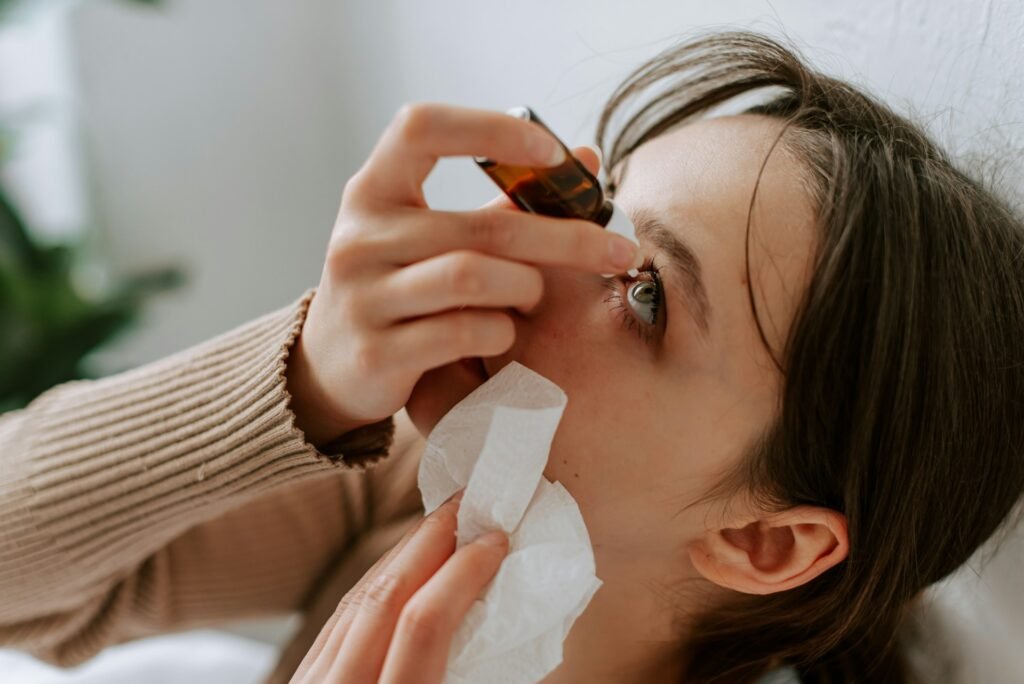
Yes, in two ways that catch people out constantly. Preservatives in bottled drops irritate the eye surface when you use them often. And redness relief drops cause a rebound effect, leaving your eyes redder than when you started. Both can turn mild irritation into a real problem.
Preservatives. Most multi-use drop bottles contain a preservative to stop bacteria growing. It does that job well, but it also irritates the eye surface. Occasional use is fine. Frequent use becomes self-defeating.
The American Academy of Ophthalmology’s guidance is to switch to preservative-free single-use vials once you’re using artificial tears more than about four times a day. This matters most for anyone on daily glaucoma drops, since those are usually preserved and taken for life.
Redness relief drops. These narrow the blood vessels in your eye. They work, but the FDA requires a specific warning on the label: overuse of this product may produce increased redness of the eye. The same rule says to stop and see a doctor if the problem lasts more than 72 hours.
As each dose wears off, the vessels open wider than before. People use more drops, and the cycle tightens. If your eyes have been getting steadily redder and drier over a few weeks and you’ve been reaching for a redness reliever, that may be your answer.
Did something change around you?
Dry air, moving air and polluted air all speed up how fast your tears evaporate. A new apartment, a desk under an air vent, the first week of the heating going on, or a long flight can each be enough to tip a borderline tear film into symptoms.
Start with the obvious question: where does the air in the room actually blow? A vent pointed at your face, a fan, or a car heater aimed at the windshield will dry your eyes faster than almost anything else here. Wind does it too, and the research has a useful detail: dryness scores after wind exposure were significantly higher when people weren’t wearing glasses.
Flying is a big one. Measurements published in an FAA-hosted report found average cabin humidity of about 11%, drier than most deserts. Contact lens wearers get the worst of it, because people without lenses instinctively blink more to compensate and lens wearers don’t. On flights over about three hours, glasses are the more comfortable choice.
Is winter really dry eye season?
Less clearly than most articles suggest. One study that followed 652 dry eye patients across the year found symptom levels didn’t actually differ between seasons. Cold, dry, heated air is genuinely hard on your eyes, but if your symptoms started in October it’s still worth hunting for a specific trigger rather than blaming the weather.
Did you recently have surgery, an illness, or a procedure?

Anything that disturbs the eye surface, the eyelids, or the nerves running through the cornea can cause dry eye that starts abruptly. Eye surgery is the clearest example, but cosmetic procedures around the eyes and recovery from a viral illness both count. Most of these improve with time and support.
| Trigger | What typically happens |
|---|---|
| LASIK | Cuts tiny corneal nerves, so the eye stops signalling that it needs tears. Dryness usually lasts three to six months while they regrow |
| Cataract surgery | Peaks around a week afterwards, settling over one to three months. Most patients already had some surface problem, so surgery often unmasks it |
| Eyelid surgery | About a quarter of patients in one large series developed dry eye, particularly where the lids don’t fully close afterwards |
| Eyelash extensions | Symptoms and clinical signs both improved a month after removal in one study |
| After a viral illness | Around one in five people reported a new dry eye symptom in the months after COVID-19 |
| Starting CPAP | More common in long-term CPAP users than in the general population. Mask edge leak blowing air upward is the likely reason |
The CPAP one comes up more than you’d expect. If your dry eye started within weeks of beginning CPAP and it’s worst first thing in the morning, check the mask fit with whoever supplied it. Don’t abandon the therapy over it, because there’s almost always an adjustment that helps.
Eyes gone dry out of nowhere?
Bring your medication list and we’ll work through it together. We’re open seven days a week inside Target Optical on 14th Street in Jersey City, and we accept medical insurance including Medicare and Medicaid.
Could it be something you don’t know you have yet?
Sometimes. Thyroid conditions, diabetes and autoimmune diseases are all associated with dry eye, and occasionally the eyes are what sends someone to their doctor in the first place. There’s also a common eyelid condition, caused by microscopic mites, that most people have never heard of.
Thyroid problems carry the strongest association of the common systemic conditions. Diabetes is linked too, though more modestly than people often assume. But Sjögren’s syndrome is the one worth knowing about. It’s an autoimmune condition that attacks the glands producing tears and saliva. According to the American Academy of Ophthalmology, around 10% of people with dry eye disease have it, two thirds of those cases are undiagnosed, and the median delay to diagnosis is ten years.
The pattern to watch for is dry eyes together with a persistently dry mouth and joint pain. If that’s you, raise it with your primary care doctor as well as your optometrist.
Demodex: the eyelash mites nobody mentions
Demodex are microscopic mites that live in eyelash follicles. In small numbers they’re normal. In larger numbers they inflame the lash line and produce symptoms almost identical to dry eye, often worse in the morning.
The telltale sign is a cylindrical collar of crusting around the base of the lashes, which an eye doctor can see under magnification but you won’t spot in a bathroom mirror. It’s more common than most people realize and frequently goes undiagnosed. Since 2023 there’s been an FDA-approved prescription drop specifically for it.
We don’t treat Demodex at Vista Vision, but we do look for it. If that’s what’s going on, we’ll tell you and refer you to someone who does. Worth ruling in or out before you spend months treating the wrong thing.
Or is it not dry eye at all?
Sudden onset is exactly when the diagnosis is least certain. Allergies, infections, eyelid inflammation and a scratched cornea can all feel like dry eye. The quickest test is what your eyes are actually doing: dry eye burns and feels gritty, allergy itches, and infection produces discharge.
| What it might be | The giveaway | What else you’d notice |
|---|---|---|
| Dry eye | Burning and grittiness. Any itch is mild | Both eyes, comes and goes, worse late in the day. Blur that clears when you blink |
| Allergies | Itching, and lots of it | Both eyes, puffy lids, often with sneezing. Seasonal |
| Viral pink eye | Watery discharge, red burning eye | Starts in one eye, spreads to the other. Often follows a cold. Contagious |
| Bacterial pink eye | Thick pus, lids stuck shut in the morning | Very contagious. Usually clears in a few days |
| Blepharitis | Crusting and flakes at the lash base | Almost identical to dry eye, typically worst on waking |
| Scratched cornea | Sudden sharp pain in one eye, usually after something happened | Constant feeling of something in the eye. Doesn’t settle with drops |
Watery eyes don’t rule out dry eye. As the Academy of Ophthalmology puts it, your eyes make more tears when they’re irritated by dry eye. Those reflex tears are watery and lack the oil that would hold them in place, so they spill over instead of doing anything useful.
And allergy treatment can cause the dry eye. Oral antihistamines can make eyes dry and even worsen eye allergy symptoms. So a few weeks of allergy tablets for itchy eyes can leave you with dry ones instead. It’s a loop worth spotting early.
See someone urgently if: you have moderate or severe eye pain, any change or loss of vision, a white spot on the cornea, sudden flashes or a shower of new floaters, or severe pain with headache, nausea and halos around lights. And one specifically for contact lens wearers: pain that continues or worsens after you take the lens out needs same-day attention. Dry eye and lens discomfort ease when the lens comes out. An infection doesn’t. We offer emergency eye care in Jersey City.
What to do next
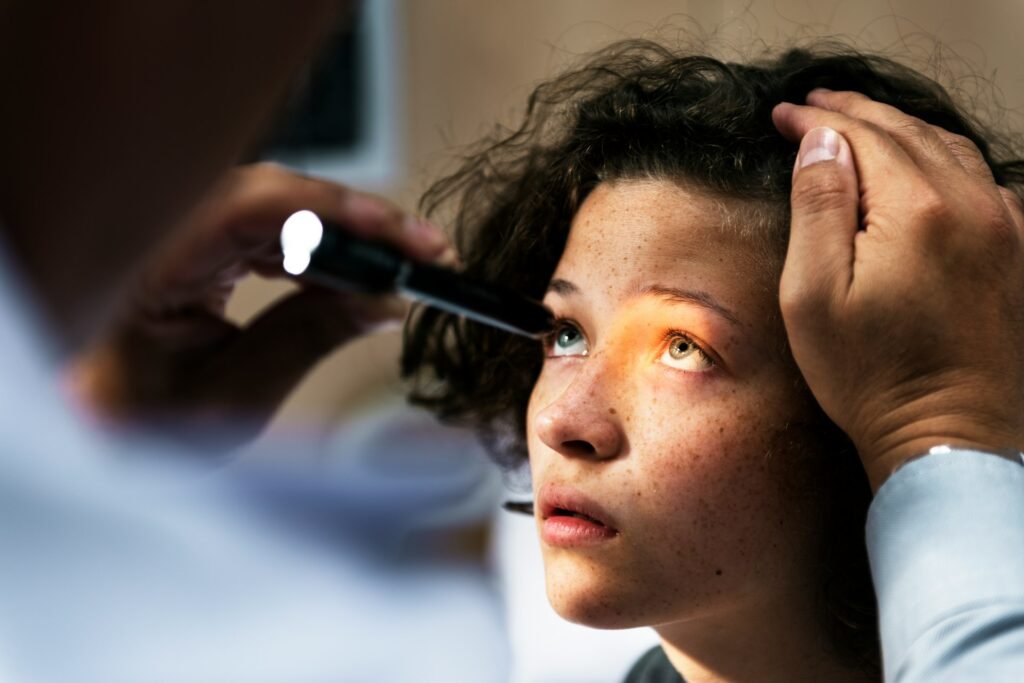
Write down what changed in the last month or two. New medications, a new home or office, a recent procedure or illness, new contact lenses, a course of allergy tablets. Bring that list to an eye exam. The cause is usually somewhere on it, and finding it beats working through treatments by trial and error.
There’s no fixed number of days you should wait. The Academy of Ophthalmology uses criteria rather than a countdown: get seen if you have moderate or severe pain, if symptoms aren’t responding to treatment, or if your vision changes at all.
Meanwhile, warm compresses and preservative-free artificial tears are safe for almost everyone. Our guide to treating dry eyes covers what actually works, what it costs, and how insurance handles it. Or just book an appointment and we’ll take a look. We’re inside Target Optical at 100 14th Street in Jersey City, open seven days.
Frequently asked questions
Can dry eyes come on overnight?
Symptoms can appear over a day or two, though the underlying problem has usually been building quietly for longer. A genuinely overnight change is more likely to be something else, such as an allergic reaction, an infection, or sleeping with a fan pointed at your face. If one eye is affected and the other isn’t, that also points away from dry eye.
What medications cause dry eyes?
Most commonly antihistamines, decongestants, antidepressants, beta blockers and diuretics, isotretinoin for acne, hormone therapy, sleeping tablets, and preserved glaucoma drops. That isn’t a complete list, and the important point is not to stop anything on your own. Bring your full medication list to your eye exam so it can be reviewed alongside your symptoms.
Why are my eyes dry but watery at the same time?
It sounds contradictory, but it’s one of the most common patterns we see. When the eye surface gets irritated by dryness, it triggers a flood of emergency tears. Those reflex tears are mostly water with very little oil, so they evaporate quickly or run down your cheek rather than coating the eye.
Can dry eyes cause blurry vision?
Yes. Your tear film is the first surface light passes through, so when it breaks up unevenly the image blurs. The classic sign is vision that goes hazy, clears for a moment when you blink, then blurs again. Vision changes that don’t clear with blinking, or that come on suddenly, need checking promptly.
Can allergies cause dry eyes?
They often occur together, and each makes the other feel worse. There’s also a twist: the oral antihistamines people take for allergies reduce tear production, so treating the allergy can bring on the dryness. If your eyes itch intensely, allergy is the more likely primary problem. If they burn and feel gritty, dry eye is.
Is sudden dry eye a sign of something serious?
Usually not. Most cases trace back to a medication, an environmental change, or a recent procedure. Occasionally it’s an early sign of a thyroid or autoimmune condition, which is one reason to have it properly assessed rather than self-managing indefinitely. Dry eyes alongside a persistently dry mouth and joint pain is the combination most worth mentioning to your doctor.
Owner & lead optometrist at Vista Vision in Jersey City, focused on glaucoma and dry eye. View full profile →
This article is general information, not medical advice. Never start or stop a prescribed medication without speaking to the doctor who prescribed it. For your specific situation, book an eye exam with a qualified optometrist.