At school
Most commonly noticed here
- Losing their place when reading
- Avoiding reading, or tiring quickly at it
- Sitting at the front, or moving closer to the board

Jersey City · Open seven days
A school screening tells you whether your child passed. An eye exam tells you what is going on. Walk in seven days a week, or book around school.
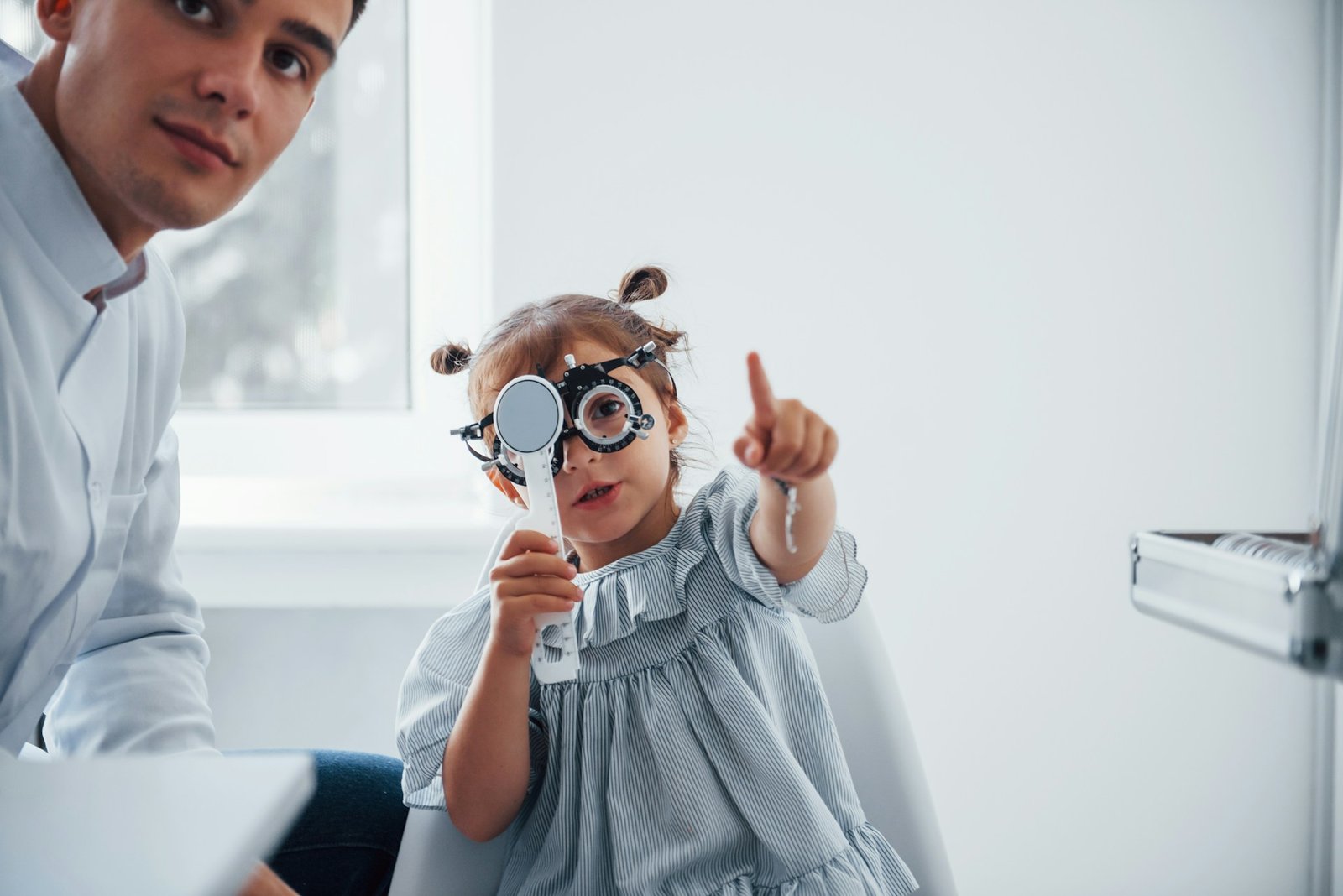
The question I get asked most
They did, and it was worth doing. But a pediatric or school screening is a pass or fail check. Usually one chart, at one distance, designed to catch obvious problems quickly in a room full of children.
A comprehensive eye exam is a different thing. I measure each eye separately, check how the two work together, and examine the health of the eye itself.
The American Optometric Association puts it plainly: an exam finds conditions that routine screening tools do not capture.
The gap that matters most is amblyopia. Between 1% and 6% of children under six have it or a risk factor for it, according to the US Preventive Services Task Force.
A child with one strong eye and one weak eye often passes a screening on the strong eye alone. They feel fine. They never mention a thing. It is treatable caught early and much harder later.
A screening passing is good news. It is not an all clear.
The schedule the American Optometric Association recommends for children with no known problems. If something is worrying you, do not wait for the next band.
What happens
Parents assume the exam depends on their child reading letters or answering reliably. For the youngest patients, almost none of it does. That is why I suggest bringing them earlier than feels necessary.
For school-age children I add a letter or picture chart and a color vision check, and for teenagers a conversation about contact lenses if they want them. About 30 minutes in total, and you go home with a slip you can read here.
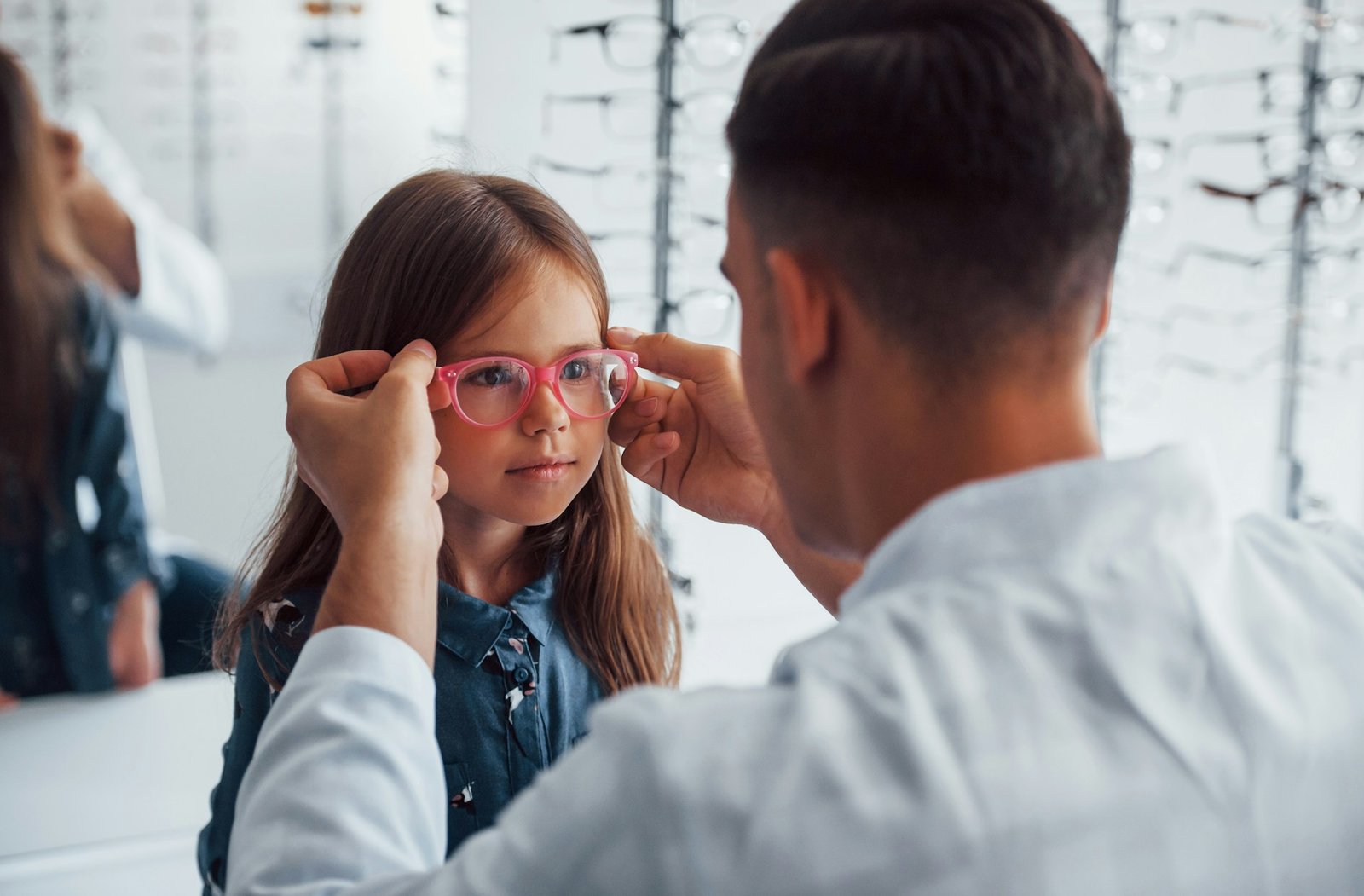
If you are worried about the appointment
I hear this before a lot of first visits, and it is almost never the problem parents expect. The tests that matter most for young children are objective. They do not need your child to cooperate, answer correctly, or stay particularly still. I can learn a great deal about a pair of eyes from across the room while a toddler ignores me.
If your child is pre-verbal, shy, autistic, or simply finds clinical rooms difficult, that is ordinary here and changes nothing about what I can measure. Tell me when you book and I will plan around it rather than discover it in the chair: lower lights, fewer instruments at once, no insistence on the slit lamp. Children stay on your lap as long as it helps.
Children rarely say their vision is poor. They have nothing to compare it against, so they show you instead. If your child is already becoming nearsighted, ask me about myopia control, and about screen habits if the headaches are the giveaway.
Most commonly noticed here
Easy to mistake for habit
Do not wait for the next age band
★★★★★“They are a wonderful team that does their job professionally. Their approach to pediatric patients, in particular, was exceptional.”
John S.Google review
★★★★★“Dr. Raithatha was kind and efficient. He was very thorough, and took his time explaining every part of the exam to me. He made sure all my questions were answered.”
Migdalua A.Google review
★★★★★“Dr Raithatha helped me out on such short notice and I truly appreciate him as a doctor. Thank you!”
Lisa Marie B.Google review

Your optometrist
Owner and lead optometrist
A child who has never seen clearly has no idea anything is wrong. They are not withholding it from you. They simply have nothing to compare it to.
I see families seven days a week in Jersey City, and children are the part of that I most enjoy. The visits are short, and the difference between catching something at four rather than nine is substantial.
If lazy eye, a squint or a strong prescription runs in your family, tell me when you book. It changes what I look for and how often I want to see your child, and it is the detail parents most often forget to mention. Read the full profile.
The things parents usually want to check first.
Your pediatrician performs a vision screening, which is a quick pass or fail check and a genuinely useful one. It is not the same as a comprehensive eye examination, which measures each eye separately, checks how they work together, and examines the health of the eye. Screenings are built for speed across many children. Exams are built to find what a screening is not looking for.
The American Optometric Association recommends an assessment between 6 and 12 months, at least one exam between 3 and 5, another before first grade, and annually after that. Come sooner if you notice an eye turning, a head tilt, or anything else on the list above.
For babies and toddlers, mostly objective testing: how the eyes track and align, focusing power measured from light reflected off the retina, how the two eyes work as a pair, and the health of the eye. None of it needs the child to answer questions. For school-age children I add a chart, a closer look at eye teaming, and a color vision check. About 30 minutes.
Sometimes, not automatically. Drops give a far better view of the back of the eye and a truer reading of a child’s focusing power, because children over-focus in a way that hides their real prescription. Vision blurs up close and lights look bright for a few hours. I will tell you before, not during.
Most vision plans include a routine children’s exam, and many medical plans cover a visit when there is a specific concern. Which applies depends on your plan and the reason for coming. Bring your card and we will check it first. See the plans we accept, or what an exam costs without insurance.
Your insurance card, any glasses your child has even if they refuse to wear them, and the result of any school screening. If they have had an eye turn, a patch or glasses before, a photo from that period is useful to me.
Yes, seven days a week. Walking in with a young child is often easier than committing weeks ahead, and we would rather see them on a day that is going well. If you want a quieter slot, call and ask.
100 14th Street
Jersey City, NJ 07310
Inside Target Optical, Newport
Two minutes from Newport PATH, with parking on site. We see families from Newport, Downtown, Journal Square, the Heights and across Hudson County.
We confirm every request by email. Or just walk in, seven days a week.