How Much Is an Eye Exam Without Insurance in Jersey City?

Without insurance, an eye exam in New Jersey averages around $153, against a national average of about $136. Most people pay somewhere between $50 and $250 depending on where they go and what gets tested. But before you assume you’re paying cash, it’s worth checking which insurance you actually have, because a lot of people are covered without realizing it.
New Jersey is a relatively expensive state for eye care, and Hudson County isn’t the cheap end of it.
Here’s what that money actually buys, what gets added on top, and the coverage most people don’t realize they already have.
Quick Takeaways
- New Jersey averages about $153 without insurance, above the national $136.
- The eye health check and the glasses prescription are two separate services.
- Contact lens fittings are always an extra charge on top.
- If you have any eye symptom, your medical plan may cover the visit.
- We accept Medicaid and Horizon NJ Health, which most Jersey City practices don’t.
How much does an eye exam cost without insurance?
Expect roughly $50 to $250, with most people landing near the middle. New Jersey’s average sits at about $153, higher than the $136 national figure. Where you go matters more than anything else: retail optical chains average around $93, while independent practices average around $144.
| What you’re looking at | Typical cost |
|---|---|
| New Jersey average, no insurance | Around $153 |
| National average | Around $136 |
| Full national range | $50 to $250 |
| Retail optical chain | Around $93 |
| Independent practice | Around $144 |
| Contact lens fitting, added on | $100 to $250 extra |
One thing worth knowing before you start calling around: most of the big chains don’t publish a national price. It’s set locally, so the figures you see quoted online are often someone else’s store in another state. If a specific price matters to you, call the actual location.
What are you actually paying for?
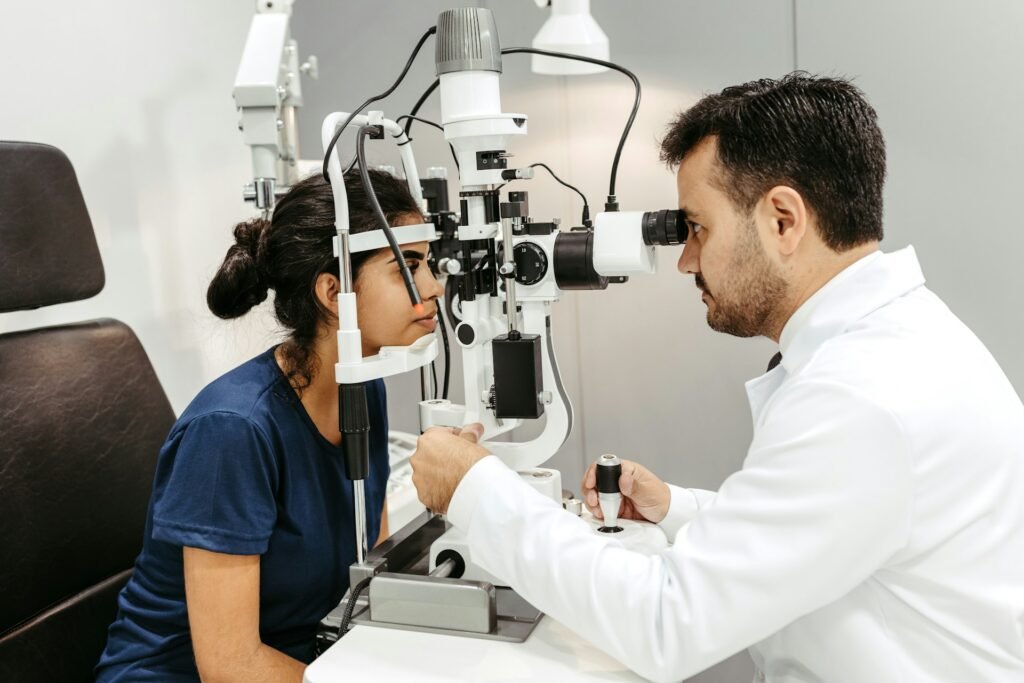
Two different things, and it helps to separate them. Checking the health of your eyes is one service, worth roughly $135 on its own. Working out your glasses prescription is another, worth roughly $54. A “comprehensive eye exam” bundles both. Anything beyond that is usually charged separately.
That split explains most of the price confusion. A cheap exam is often a refraction, the part that produces your prescription, with a quick look at eye health. A more expensive one includes more testing.
Common extras and roughly what they add:
| Add-on | Extra cost | Worth it? |
|---|---|---|
| Contact lens fitting | $100 to $250 | Required if you want a contacts prescription. Specialty lenses cost more |
| Dilation | Around $20 to $25 | Yes if you have risk factors. It’s the most thorough way to see the retina |
| Retinal imaging | $25 to $50 | Often offered as an alternative to dilation. Useful, but usually optional |
| Visual field test | Varies | Only when there’s a reason, such as glaucoma monitoring |
Retinal imaging is the one people get caught out by. It’s useful, but it’s frequently presented at the desk as a routine part of the visit when it’s actually an optional out-of-pocket extra. Ask whether it’s included before you agree to it.
Do you actually need to pay out of pocket?
Often not, and this is the part most people get wrong. “No insurance” usually means no vision plan. But if you have any eye symptom at all, such as dryness, irritation, flashes or blurring, or a condition like diabetes, that’s a medical visit, and it goes through your regular health insurance instead.
Vision plans and medical insurance do different jobs. A vision plan covers a routine exam for glasses and an eyewear allowance. Your medical plan covers diagnosis and treatment of eye conditions.
The American Optometric Association’s guidance is clear: if the reason for your visit is refractive, bill the vision plan. If there’s a complaint beyond that, or a medical issue with your eye health, bill the medical plan.
Two questions worth asking yourself
Do you have health insurance of any kind? Medicare, Medicaid, an employer plan, a marketplace plan. If yes, and you have any eye symptom, you may well be covered for a medical eye exam even with no vision plan at all.
Have you checked whether your employer includes vision? A lot of people carry a vision benefit they’ve never used, bundled into a package they signed up for years ago.
A note on Medicare, since it catches people out: it doesn’t cover routine exams for glasses or contacts. It does cover eye care that’s needed to diagnose or treat a medical problem. We go through this in more detail in our guide to Medicare and eye exams.
And if you’re on NJ FamilyCare or Medicaid, you likely have an annual eye exam covered already. We accept Medicaid and Horizon NJ Health, which not many Jersey City practices do. Details vary by plan, so call us on (201) 500-6977 and we’ll check your specific benefits before you come in. You can also see the full list of plans we accept.
Not sure what you’re covered for?
Call us and we’ll check your benefits before you book, so there are no surprises. We’re open seven days a week inside Target Optical on 14th Street, and we accept medical insurance including Medicare and Medicaid.
Free and low-cost eye care in New Jersey
If cost is the real barrier, there are programs that help, and one of them changed recently in a way that hasn’t caught up online. EyeCare America dropped its eligibility age from 65 to 18 in 2025, so it now covers far more adults for a no-cost medical eye exam.
EyeCare America provides a medical eye exam and up to a year of follow-up at no out-of-pocket cost. You need to be 18 or over, a US citizen or legal resident, uninsured, and not have seen an ophthalmologist in three or more years. It doesn’t cover refraction, glasses or contacts, so it’s for eye health, not for a prescription.
The National Eye Institute keeps the most reliable list of national programs, including VSP Eyes of Hope, New Eyes, Lions Clubs and InfantSEE, which offers free assessments for babies aged 6 to 12 months.
New Jersey’s own resource page lists help with glasses specifically. One catch worth flagging: most glasses assistance programs need a current prescription first, which means you still need an exam before they can help.
Local Lions Clubs sometimes help with exam costs, but it’s decided branch by branch, so you have to ask yours directly.
How often do you actually need an eye exam?
Less often than you might fear, if you’re low risk and symptom-free. Adults under 65 with no risk factors can go every two years. Annually if you’re 65 or over, wear contact lenses, have diabetes, or have any other risk factor. Children need more frequent checks than most parents expect.
| Who | How often |
|---|---|
| Adults 18 to 64, low risk | At least every two years |
| Adults 18 to 64, at risk | At least annually |
| Adults 65 and over | Annually |
| Contact lens wearers | Annually. Wearing lenses counts as a risk factor |
| People with diabetes | Annually, from diagnosis |
| Children 6 to 17 | Before first grade, then annually |
| Babies | Once between 6 and 12 months |
Source: American Optometric Association.
Parents, one thing worth knowing: New Jersey schools screen vision only every other year, from kindergarten through grade 10. A school screening also isn’t an eye exam. It checks whether a child can read a chart at distance, and it will miss focusing problems, eye teaming issues and eye health conditions entirely. Plenty of children pass a school screening and still can’t see comfortably to read.
Getting an eye exam in Jersey City
We’re at 100 14th Street, inside Target Optical, open seven days a week. Before you book anywhere, it’s worth two minutes on the phone to check what you’re actually covered for. A surprising number of people who assume they’re paying cash turn out to have a benefit they can use.
If you’re paying out of pocket, ask three things when you call anywhere: what the exam includes, whether dilation or imaging costs extra, and whether a contact lens fitting is a separate charge. Those answers explain almost every price difference.
Call us on (201) 500-6977 and we’ll check your benefits, or book an appointment online. You can also read more about our adult and senior eye exams.
Frequently asked questions
How much is an eye exam without insurance in NJ?
Around $153 on average, which is above the national average of roughly $136. The realistic range runs from about $50 at a discount retail chain to $250 or more at a private practice for a new patient with additional testing. New Jersey sits among the more expensive states for eye care.
Why is a contact lens exam more expensive?
Because it’s a separate service on top of the standard exam. Fitting contacts means measuring the curvature of your cornea, trialing lenses, checking how they sit and move, and following up to confirm your eyes are tolerating them. Expect $100 to $250 extra, with specialty lenses for astigmatism or keratoconus costing considerably more.
Can I get an eye exam with Medicaid in Jersey City?
Yes, and we accept it, which is less common among Jersey City practices than you’d expect. NJ FamilyCare plans generally cover a routine eye exam once a year plus help toward glasses, though the details vary between plans. Call us on (201) 500-6977 with your card to hand and we’ll verify exactly what your plan covers.
Is a cheap eye exam worse than an expensive one?
Not necessarily, but you’re often buying different things. Price differences usually come down to how much testing is included, whether it’s a new patient visit, and the practice’s own costs. The useful question isn’t what it costs, it’s what’s included. Ask whether eye health testing is part of the price or an add-on, and you’ll be comparing like with like.
Owner and lead optometrist at Vista Vision in Jersey City, focused on glaucoma and dry eye. View full profile
This article is general information, not medical or financial advice. Prices were verified in August 2026 and vary by location and provider. Insurance coverage depends on your individual plan, so always confirm your benefits directly.