
How to Know If You Need Glasses

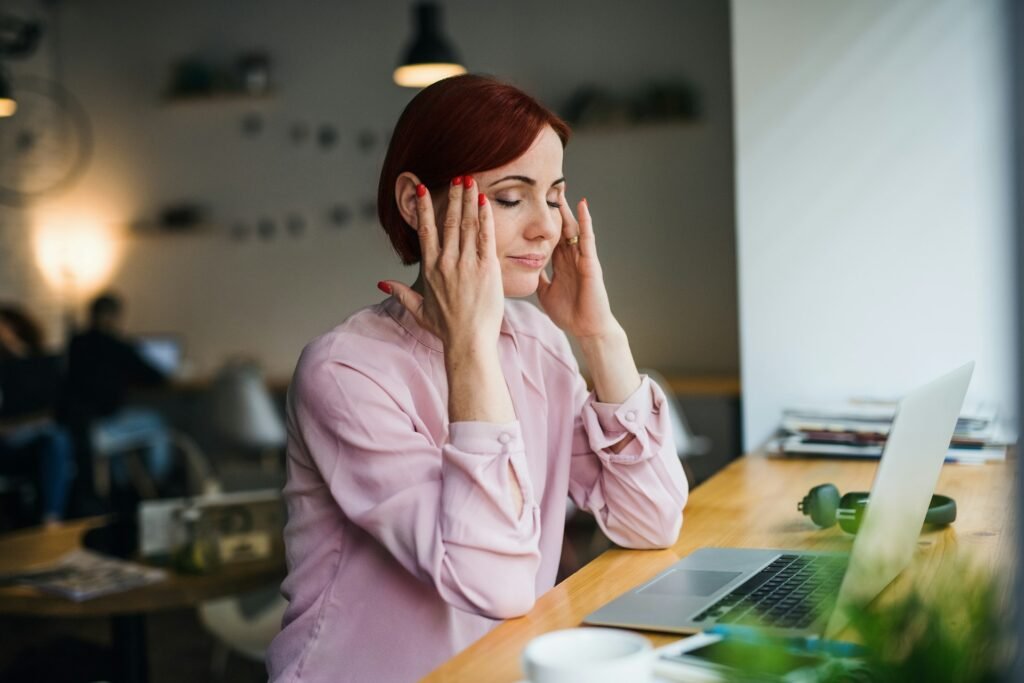
Squinting, headaches after screen work, holding your phone further away, and blur that doesn’t clear when you rest are the four that matter. The catch is that uncorrected vision rarely announces itself. Most people adapt so gradually that the first real evidence comes when I hold a trial lens up and the room sharpens.
What follows is each sign and what it usually points to, how to tell ordinary tired eyes from vision that needs correcting, and why 20/20 on a chart doesn’t settle the question.
Quick Takeaways
- Squinting is the most reliable sign, because it’s something you do without deciding to.
- Blur that clears after rest is strain. Blur that stays is usually refractive.
- You can read 20/20 on the chart and still benefit from glasses.
- Near vision getting harder after 45 is presbyopia, and the NEI says everyone gets it.
- Low-risk adults need an exam every two years, and yearly from 65.
What are the signs you need glasses?
Each symptom points somewhere specific. Distance blur suggests nearsightedness, near blur after 45 suggests presbyopia, and headaches after sustained focus suggest uncorrected astigmatism or a focusing problem. The symptom tells you less than the pattern around it.
| What you notice | What it usually points to |
|---|---|
| Road signs blur before you’re close | Nearsightedness |
| You hold your phone further away than you used to | Presbyopia, if you’re past about 45 |
| Headaches after an hour of reading or screens | Uncorrected astigmatism, or a focusing problem |
| Headlights streak and flare at night | Astigmatism |
| You squint without noticing | Any uncorrected refractive error |
| Words swim or you lose your place on a line | Eye teaming, which glasses sometimes fix |
| One eye is clearly worse than the other | Worth checking promptly rather than waiting |
Squinting is the one I single out. It works by narrowing the opening light passes through, which sharpens everything slightly, and it’s involuntary. By the time you catch yourself doing it, your eyes have been compensating for months.
Are my eyes just tired, or do I need glasses?
Rest is the test. Ordinary eye strain lifts after sleep, a break from screens, or a weekend. A refractive error doesn’t, because the lens shape that causes it is still there on Monday morning. If a week off hasn’t fixed it, rest isn’t the answer.
Sounds like strain
- Builds through the day, better in the morning
- Follows long screen sessions or poor light
- Clears after sleep or a few days off
- Both eyes feel the same
- Vision itself is sharp when you look up
Sounds refractive
- There whether you’re rested or not
- Squinting or moving closer actually helps
- Specific distances are blurry, consistently
- Headaches return every time you concentrate
- Someone else can read a sign you can’t
The two also overlap, and that is where most of the confusion I hear comes from. Uncorrected astigmatism makes your focusing system work harder to hold an image steady, which produces exactly the tired, achy feeling people blame on screens. In that case the strain is real and the cause is still refractive.
Can you have 20/20 vision and still need glasses?
Yes, and it’s common. 20/20 measures how much detail you can resolve on a chart at distance, on one afternoon, with as long as you like to stare at it. It says nothing about how hard your eyes worked to get there, how you cope at arm’s length, or whether you can hold it for an hour.
A small amount of farsightedness is the explanation I find most often. A younger focusing system can neutralize it by working continuously, which produces a 20/20 line on the chart and a headache by three in the afternoon. The chart records the result, not the effort.
The American Optometric Association makes the wider version of this point: “Many eye and vision problems have no obvious signs or symptoms, so you might not know a problem exists,” and only a comprehensive examination can evaluate your overall eye health and vision status. A screening that checks the chart and nothing else is measuring one thing out of many.
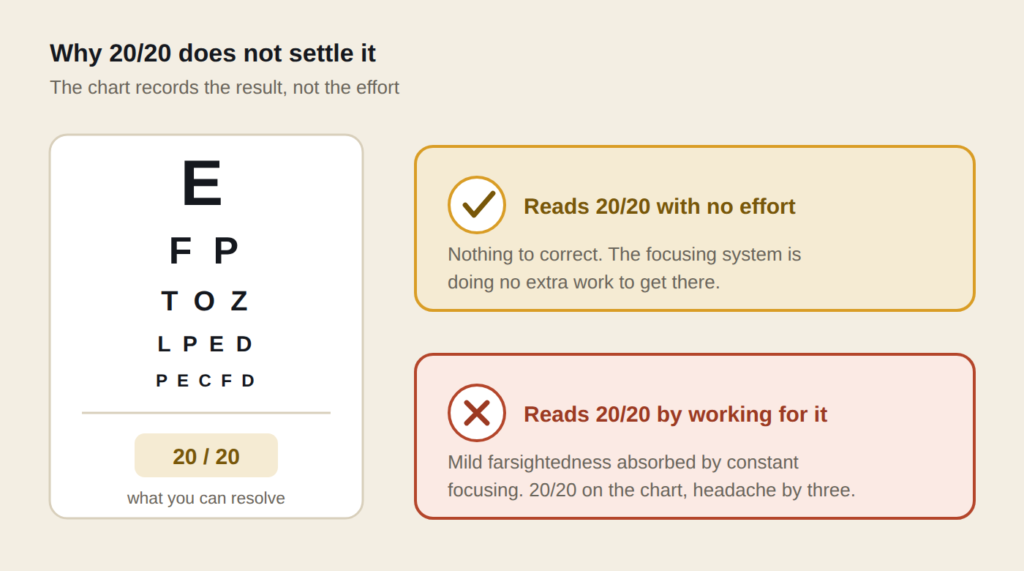
A comprehensive exam is not a chart test. The AOA lists depth perception, color vision, peripheral vision and pupil response, plus an assessment of eye focusing, eye teaming and eye movement, and an examination of eye health. The refraction that produces your prescription is one component among several.
Why does reading get harder after 40?
Because the lens inside your eye stiffens with age and stops changing shape as readily. The National Eye Institute calls presbyopia a normal part of aging and states plainly that everyone gets it, usually after age 45.
The giveaway is the arm. Holding a menu or a phone further away briefly works, because it reduces how much focusing effort the eye has to produce. When your arms run out of length, that’s presbyopia.

NEI notes that brighter light and larger print help early on, and that most people eventually need glasses or contact lenses for reading. It arrives whatever your distance vision has been. Someone who has never worn glasses in their life still gets it, which catches people out.
How can you test if you need glasses at home?
You can gather evidence, not a diagnosis, and the evidence is useful to me. Cover one eye and compare it with the other at distance and at reading range. Check whether squinting sharpens a sign. Notice whether blur survives a good night’s sleep. None of it produces a prescription, but all of it shortens the appointment.
The one-eye-at-a-time check is the one I’d ask you to do, because binocular vision hides a surprising amount. A substantial difference between your two eyes can go unnoticed for years, since the better eye quietly carries the worse one whenever both are open.

If the directional pattern interests you, the dial chart in our guide to the astigmatism test screens for that specifically. For children, the signs are different and often behavioral rather than reported, which we cover in signs your child needs glasses.
How often should you have an eye exam?
For low-risk adults I recommend every two years to 64, then annually from 65. At least annually at any age if you have diabetes, a family history of eye disease, wear contact lenses, or work in a visually demanding job. The AOA sets the schedule by risk rather than by symptoms.
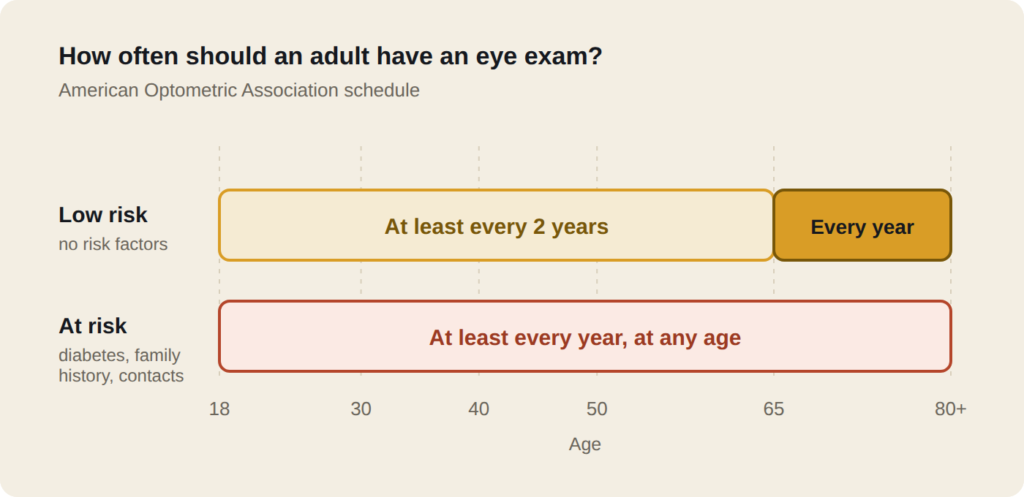
The interval is built around what has no symptoms. Glaucoma takes peripheral vision first and quietly, diabetic retinopathy does its early damage without any change you’d notice, and both of them I find by looking rather than by asking. Waiting until something feels wrong means waiting past the point where either is easiest to treat.
Find out properly in about half an hour
We’re at 100 14th Street in Jersey City, inside Target Optical, seven days a week. Bring your current glasses if you have any, and tell us what you’ve noticed. Most medical and vision plans accepted, including Medicare and Medicaid.
If you already have a prescription and want to know what the numbers on it mean, we’ve explained every box in our guide to reading your eye prescription.
Frequently asked questions
Will wearing glasses make my eyes worse?
No, and it is the question I hear most often from new glasses wearers. Glasses bend light before it reaches your eye and change nothing about the eye itself. What does happen is that clear vision becomes the thing you’re used to, so going without feels worse than it did before. Your eyes haven’t deteriorated faster, your reference point has moved.
Can I just buy reading glasses from a pharmacy?
For mild presbyopia with no other issues, off-the-shelf readers work for many people. They use the same power in both lenses and no astigmatism correction, so they suit you only if your eyes are closely matched. They also skip the eye health examination entirely, which is the part that finds the conditions with no symptoms.
I’ve never needed glasses. Why now?
Two common reasons. Presbyopia arrives for everyone after about 45 regardless of your history. And a mild farsightedness your focusing system used to absorb without effort becomes noticeable as that system ages, which is why some people find distance vision fine but close work suddenly tiring.
Owner and lead optometrist at Vista Vision in Jersey City, focused on glaucoma and dry eye. View full profile
This article is general information, not medical advice, and nothing here can tell you your prescription. If your vision has changed suddenly, affects one eye only, or comes with pain, flashes or new floaters, see an optometrist or ophthalmologist promptly.